You practiced, took lessons. Did everything the experts said. So why does the water still feel like something to fight?
What I discovered 26 years ago changed everything about how I paddle. Then it changed everything for Lesley. Here's what we found.
I Was Doing Everything Right. That Was The Problem.
I was a rookie when I discovered the Greenland paddle.
I'd been trying to learn the balance brace... using a paddle float at the end of my paddle, trying to lay back on the water the way I saw the Inuit do in a video.
I sank like a rock. Every time.
I watched the videos carefully. And I noticed something. The Inuit was rotating in a way that seemed impossible to me. His pelvis had to be free to move like that. Mine wasn't.
Every certified instructor had told me to move the foot pegs forward until I have full contact with both my legs. Like kayaking won't work if you don't do it like this. I was following their advice. And now it was preventing me from moving the way the Inuit moved.
If you ever followed every instruction exactly — and still felt like something isn't working — you already know what this felt like.
So I changed the fit. Against everyone's advice. And it worked, instantly.
I floated there. On my first try. From there, learning to roll was easy. Effortless.
I had only been kayaking for a few months… but I could already roll with more ease than all the experienced kayakers I knew. People thought I was talented. But I knew the truth.
That moment planted a question I've been living inside for 26 years.
What else have the Inuit figured out that we are missing?
Turns out... a lot. Things that change not just how you paddle, but how at home you feel on the water. It's not about adding more techniques.
Not about adding to something you already know. It's about changing the foundation.
THE EXPERT MODEL
Move the foot pegs forward until you have full contact. Force the fit. Restrict the pelvis.
THE INUIT WAY
Free the pelvis to rotate. Change the fit against conventional advice. Float effortlessly.
When I Met Lesley. She Was About To Quit.
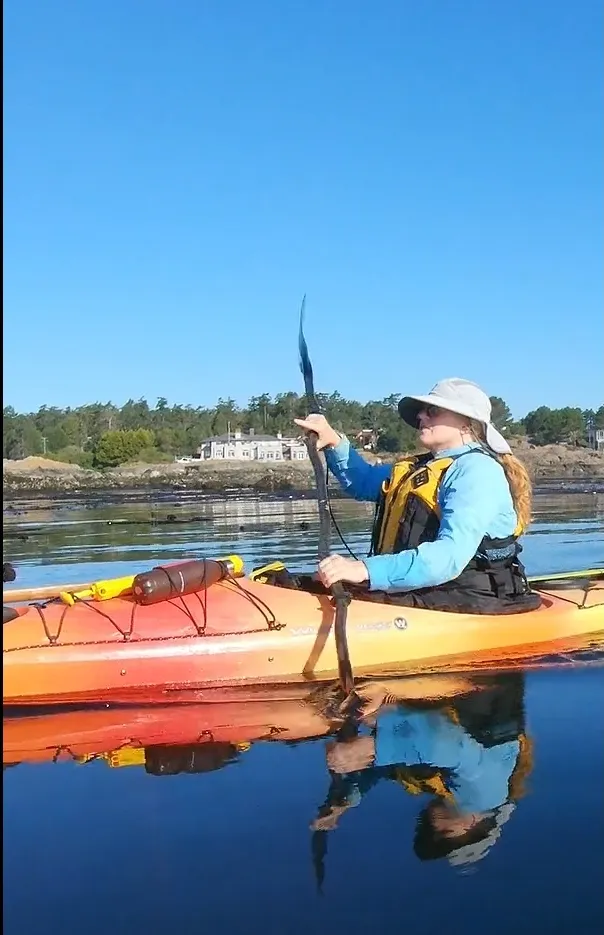
It was a beautiful calm sunny afternoon when I first met Lesley. She was slow on the water. We waited for her patiently.
On the way back it was almost flat calm... but I noticed something. An uneasiness. It wasn't rough, but even the little ripples on the water were making her anxious. I didn't want to think about what might have happened if the waves had built up. In that channel, with the current, they can build quickly.
“It's not worth destroying my body. No matter how much I enjoy it.”
When we were packing up, Lesley told me something that surprised me. With a heavy heart. As much as she loves paddling, she had decided to stop. Too much pain. Ibuprofen after every paddle. Shoulder pain. Elbow pain. Wrist pain.
Most paddlers in that situation assume nothing can be done. Lesley had already taken courses from the experts. Had her certificate. What else could possibly work?
Most instructors would have told her to stop. I told her something different. I knew what was causing the pain. And I knew there was another way. So I made a suggestion.
I'll teach you the other model. With the Greenland paddle. But not with the same force that was causing the pain.
“There was never a moment when I felt like I might go over.”
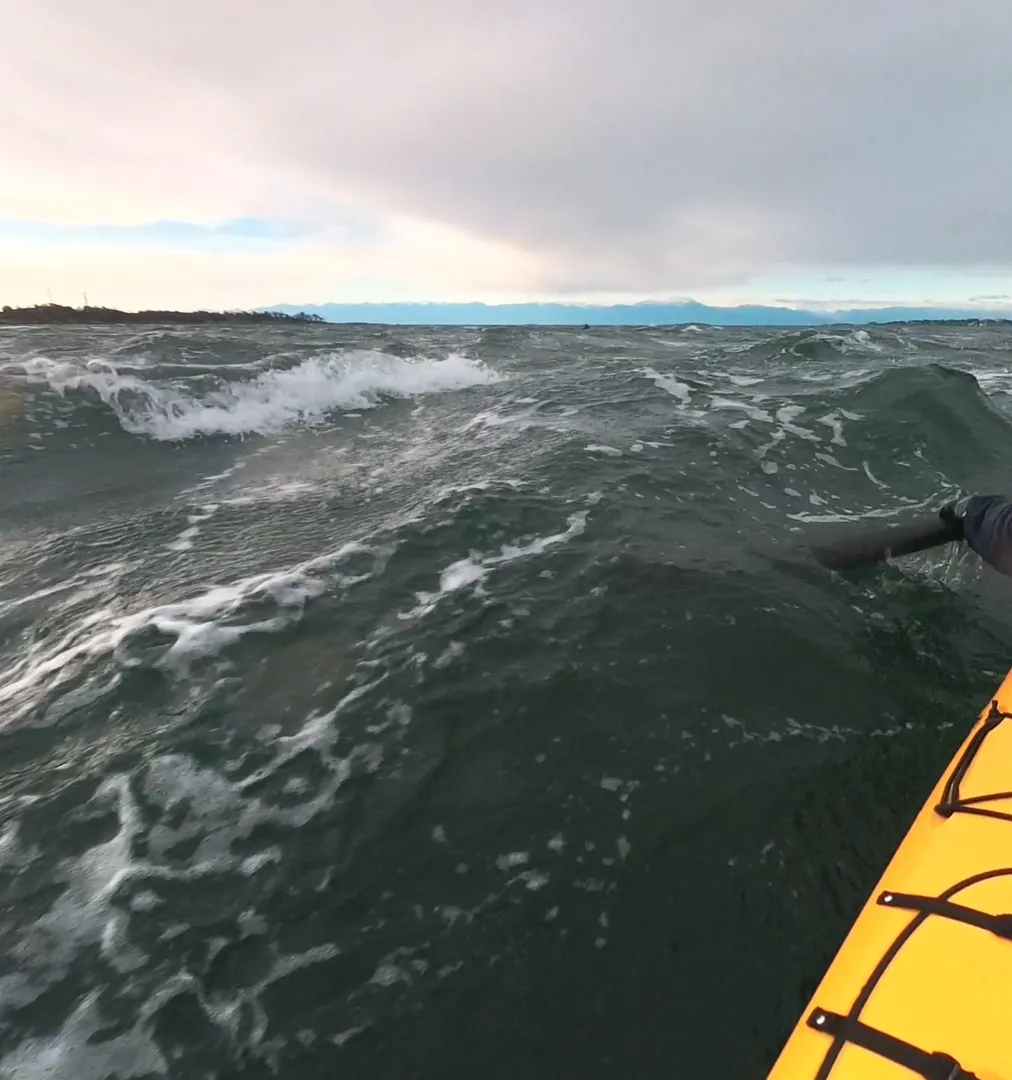
She said yes. And a few months later, she got a chance to test what she discovered… in real conditions. On a 19-day expedition to Haida Gwaii. With a fully loaded kayak. On one of the days, even the Haida were not going on the water. The wind. The waves building into whitecaps. We shouldn't have been there either... but it crept up on us.
These were conditions where most experienced kayakers would be capsizing.
After we landed, Lesley said:
"There was never a moment when I felt like I might go over."
A while later, someone said something to me about Lesley that surprised me.
Some time after that trip, I was paddling with Lesley and another friend. A woman who had paddled with Lesley before. Before any of this.
At one point she pulled up beside me and said something that really surprised me.
"It's amazing that you could recognize that she was such a gifted paddler."
She thought that's what happened. That I had spotted some natural talent in Lesley and helped her express it.
But that's not what happened.
Lesley wasn't gifted. She was in pain. She was quitting. She was the paddler most instructors would have written off.
What changed wasn't Lesley.
What Changed Wasn't Lesley.
What Changed Was The Model.
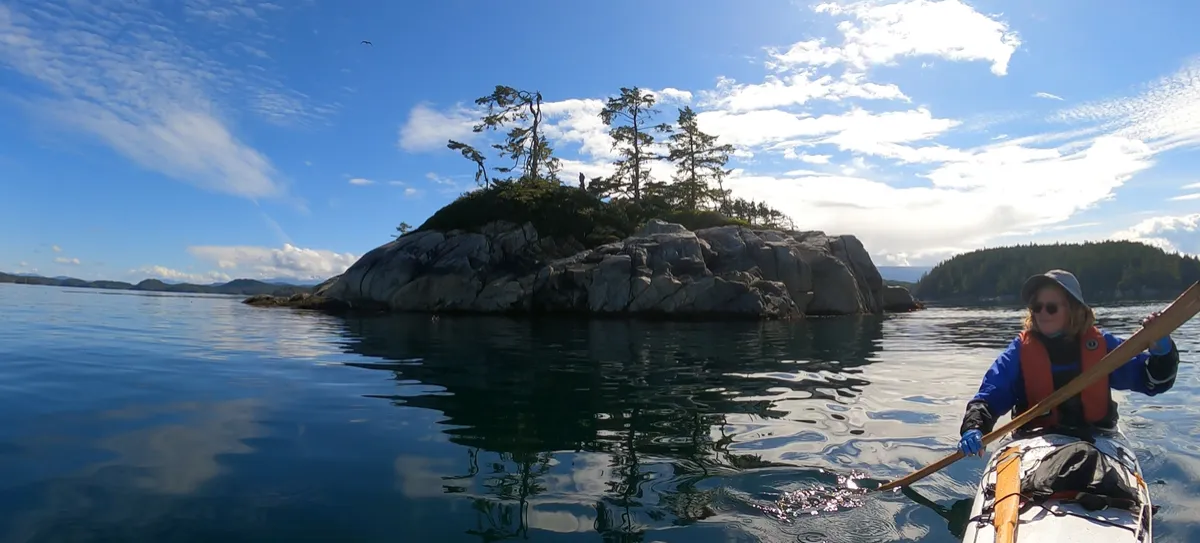
One Model Is Built On Effort. The Other On Relationship.
THE CONVENTIONAL MODEL
One model is built on effort and control.
Most paddlers - even experienced ones, even Greenland paddle instructors - are working from one model. There's another one. And almost nobody knows it exists.
THE relational MODEL
Focuses on timing, alignment, and relationship with the water.
Everything I teach comes from the relational model. And when you feel the difference... everything else starts to make sense.
Here's what changes when you paddle from the second model:
- Stability without bracing - because the paddle is already where it needs to be. Aligned with your body.
- Power that comes from precise sequencing - not muscles.
- Shoulders that feel better after paddling than before.
- Confidence in conditions that used to make you feel anxious.
- The water feeling like a dance partner, not the enemy.
I wasn't planning to build a course. Then Lesley said something that changed that.
When Lesley told me she was ready to give up on paddling, I made her a suggestion.
I'll teach you the whole system. And we film it. All of it. Every principle. Every step. Every breakthrough. In the exact order she learned it.
So other paddlers can see exactly what changed for her, and how.
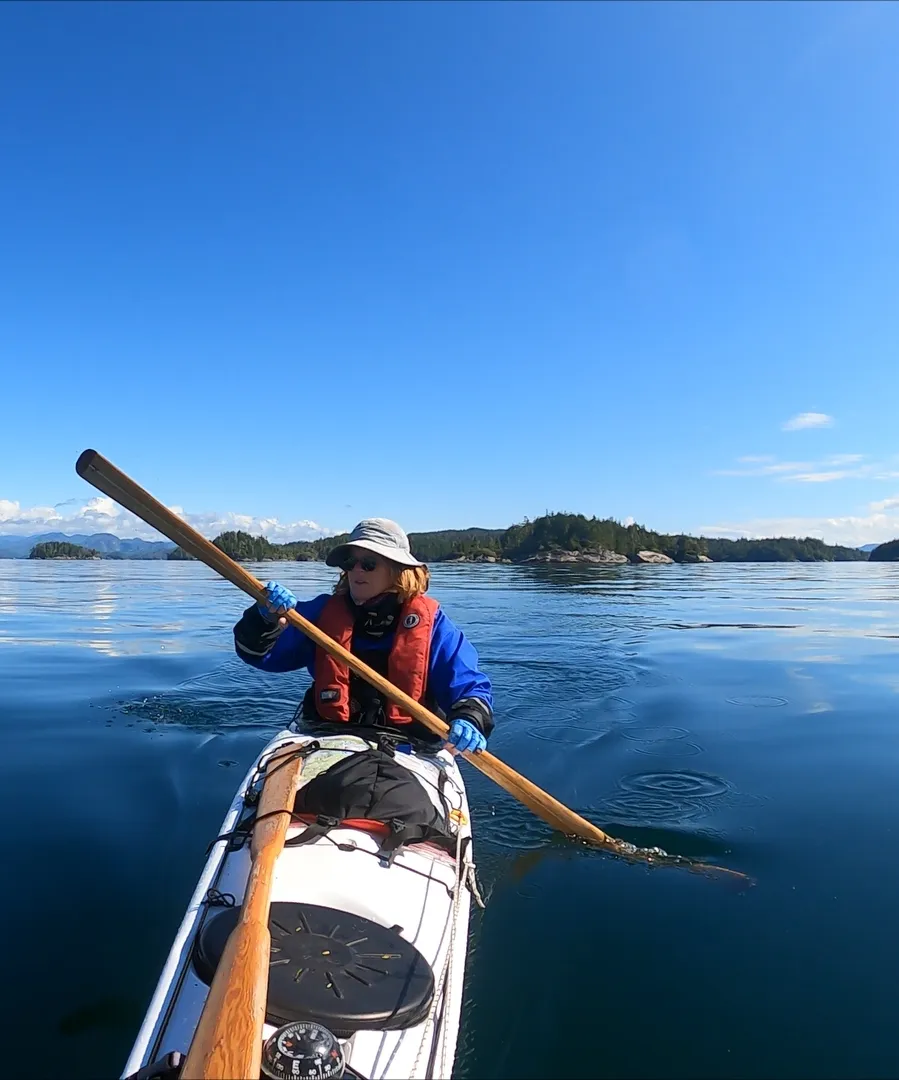
Introducing "Journey To Confidence".
THE SYLLABUS
The Foundation That Makes Everything Else Possible
You watch Lesley learn. You learn everything she learned. In the same sequence. At your own pace. From wherever you are in the world.
It covers things you won't find in any standard kayaking course. Because what's inside doesn't come from the standard model.
It's not a collection of techniques. It's one system — the foundation that makes everything else possible. The one I've been building and refining for 26 years.
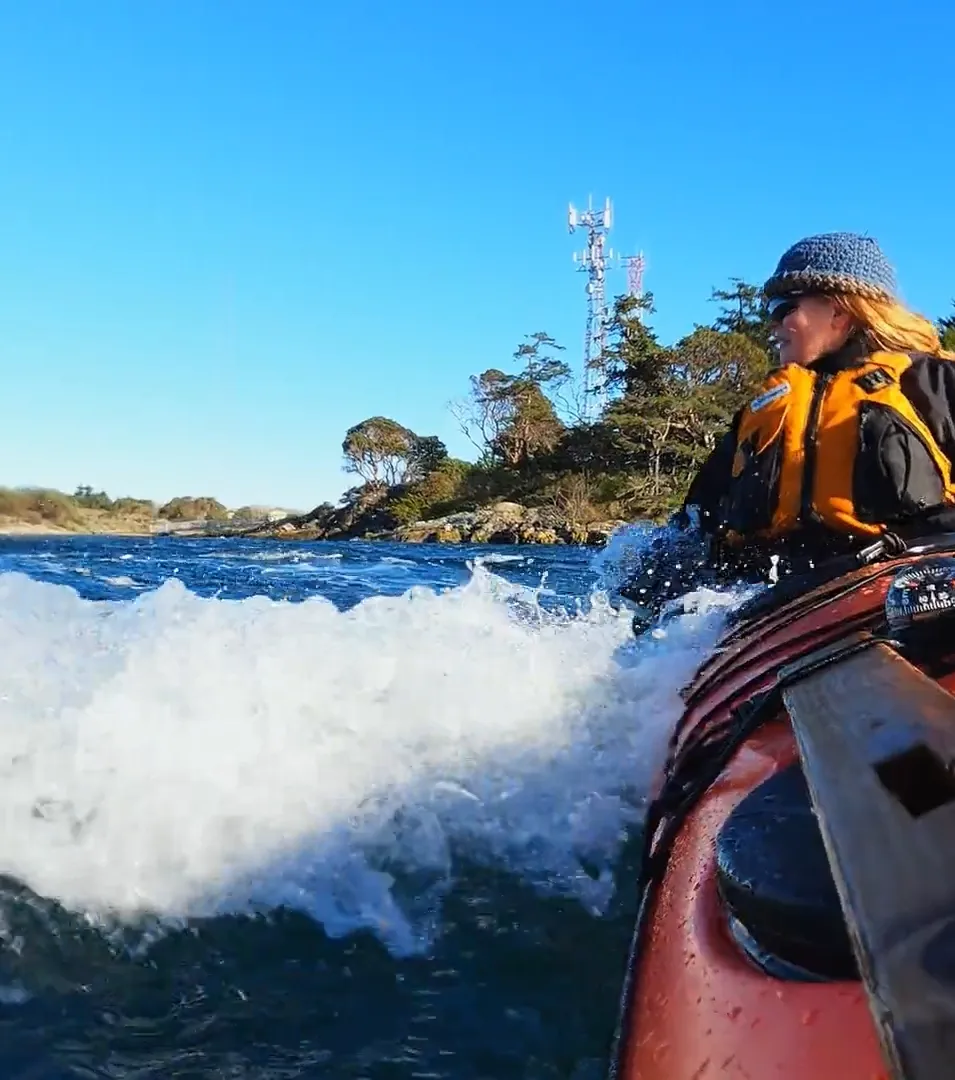
01 / Wear Your Kayak
The way you fit in your kayak isn't about 6, or 5 points of contact. It's about letting your whole body move naturally, especially the pelvis.
02 / The Canted Blade
The Greenland paddle's natural angle is what makes the paddle stick in the water. To keep you from capsizing in either direction.
03 / The Release
What happens when you stop trying to move the paddle and start organizing your body instead. Power without forcing.
04 / The Alignment
Timing the release to the moment when your hand, spine, and pelvis are organized above the paddle. Stability built into every stroke.
05 / The Whip
Sequencing energy through your body instead of pushing harder. More power. Less effort.
06 / Firm Water
The water firms around the blade and becomes a fixed point. You stop fighting resistance. You choose how much power to generate and release.
07 / The Resting Edge
A continuous gentle edge that keeps your kayak balanced and responsive without any tension.
08 / The Pause
The moment between strokes is where you're in the most stable position. This only works if you learned the previous lessons.
09 / Natural Recovery
When you're truly aligned, recovery from instability happens naturally. You stop interfering. The system catches you.
But the course is only part of what you get.
More Than A Course. A Community Of Serious Paddlers.
Journey to Confidence is inside The Club — my online membership for serious paddlers who want to go deeper than any course has taken them before.
Inside The Club you also get something no course can give you: a community of paddlers who are working through the same model, asking the same questions, and making the same discoveries you are. People who take this as seriously as you do.
And you get my feedback anytime.
Send me a video of yourself working on a technique — anything in the system — and I'll give you personal feedback. Not a generic reply. Actual eyes on your paddling. Like I'm right there on the water with you.
Inside The Club
Full Access to 'Journey to Confidence'
Video That allow you to go deeper on specific topic. Like advanced turning or rolling.
Private Community of Paddlers
Personal Video Feedback from Me
Cancel anytime.
NO RISK
Try The Club Free For 14 Days.
$349/year After Free Trial
Price in CAD
You can always cancel if it's not for you.
You've Already Done The Hard Part.
Here's what I mean. You practiced. You took the lessons. You put in the time. And you kept showing up even when it didn't click. That's not a small thing. Most people stop there and decide they've reached their ceiling. You didn't. Which means you're exactly who this was built for.
HERE'S WHAT HAPPENS WHEN YOU JOIN:
STEP 01
Start your 14-day free trial today. No charge. Just access - to Journey to Confidence, to all the other video lessons if you want to go deeper, to the community, and to me.
STEP 02
Spend a week inside. Watch Lesley learn. Start working through the system at your own pace. Send me a video if you want quick feedback.
STEP 03
Stay if it changes how you paddle, or cancel. If it doesn't feel like something fundamental has shifted - if you don't feel the difference between effort and organization - just cancel.
The 30-Day Guarantee
And if you stay, you're covered for a full 30 days by a complete money-back guarantee. If at any point in that first month you decide it's not for you, I'll refund every penny. No hard feelings. The work you've already done inside stays with you.
I'm making this as easy as I can to say yes to - because I know if it's a good fit for you, it's invaluable. And if it's not a good fit, that's ok too. I hope you find what works for you.
Try it free for 14 days. Stay if it changes how you paddle.
STUDENT SUCCESS
These Weren't Gifted Paddlers. They Were Working From The Wrong Model.
Following your advice has kept me paddling at 82 with others 15-20 years younger.
I was muscling through keeping up with the group. My paddling was stiff, and muscled, and pulling, and now I feel like I can look and the kayak will go where I look. And I can do it gently and it does start to feel like dancing. So I learned to paddle with ease and comfort and I’m less worried about stability. I can now go out by myself
I impressed the guides with my ability to set the pace. The guide actually traded paddles with me… she wanted to know how I was setting the pace without breaking a sweat.
One Question Before You Decide.
If you've watched some of my videos and something resonated… this is for you.
It's not for casual paddlers. Not for people who need to believe that modern techniques are better. If you are not ready to let go of forcing an outcome, this will not work for you.
It's for people for whom this matters. People who have practiced, taken lessons, worked hard — and still feel like paddling is hard.
People who suspect the problem isn't effort. It's the model.
People like Lesley was. Before Haida Gwaii.
The Club
© 2026 The Club. All rights reserved.
Privacy Policy | Terms of Service