Paddling that starts with how your body already wants to move.
Paddling often gets harder with age. What if it doesn't have to?
THE RELATIONAL MODEL
Dancing With the Sea is Paulo Ouellet's
sea kayaking school on the BC coast and online
"Following your advice has kept me paddling at 84 with others 15-20 years younger."
Dave Fairbrook
I've paddled with the Greenland paddle since 2000 and have taught it since 2006. I created the relational model of sea kayaking: the whole body develops flow before there is any resistance, so the kayak stays stable as you paddle. Paddling feels easier and more natural for years to come.
Greenland Paddle Since 2000 • Teaching Since 2006 • BC Coast & Online
CORE PHILOSOPHY
What is the relational model
of sea kayaking?
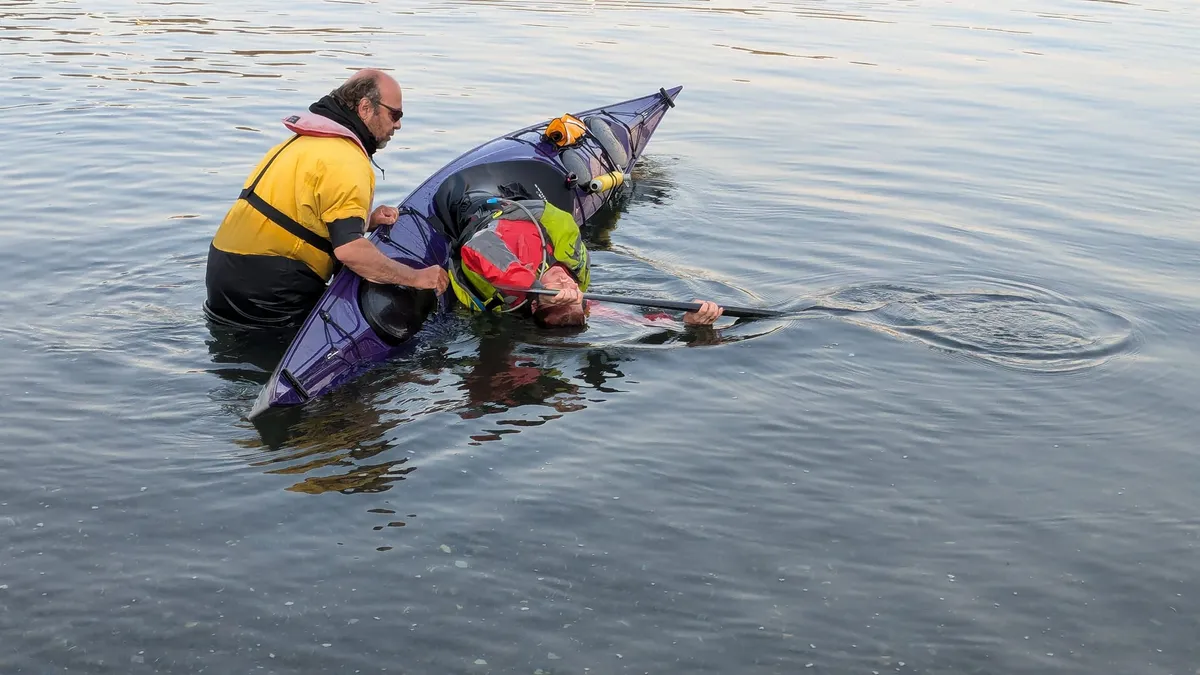
The relational model of sea kayaking is a way of paddling where you time your movement with the elements, so you move in sync with them. That's where the name comes from.
Instead of using your body as a machine to move the boat, you move like an amphibian on the water, interacting with the elements gracefully.
That's when you're dancing.
How it works
You start with one point of contact, on your sit bones. Your pelvis moves freely and your whole body moves as a whole, like when you walk.
From there, you can apply power to the paddle anywhere along the forward stroke, at any time. You can time it with the waves and the elements. You can apply it when your hand, hip, and shoulders are aligned. And you can apply it with enough speed to lock the paddle in place, so it feels like the paddle is stuck in cement.
In my opinion, this is the most important way to stay safe when kayaking.
How it differs from the force model
Most of us were taught the force model, which uses the body like a mechanical system to move the boat. It works, but it leaves no room for flow, and in rough water the forward stroke doesn't put body and paddle in alignment.
The relational model focuses on you and your body.
Force Model
A tight fit. You move, the kayak moves. No room for flow.
Force the paddle to move hard
A lot of strain on the arms and shoulders
React with a brace to stop a capsize
Feels like work
Relational Model
A free pelvis. Room for the body to flow.
The whole body develops flow before there is any resistance
The whole body shares the work, much less stress on shoulders
Alignment creates stability as you paddle. No need to change position
A common remark I hear from clients: "It feels like I'm not doing anything."
The water becomes firm through speed, not force.
Force the paddle to move hard and slow, and it feels heavy. Develop the flow first, then land the stroke quickly, and the paddle feels locked in the water.
Try both next time you're out. Notice which one feels firm.
The Greenland paddle makes it possible. The relational model is what changes everything.
Who is Dancing With the Sea for?
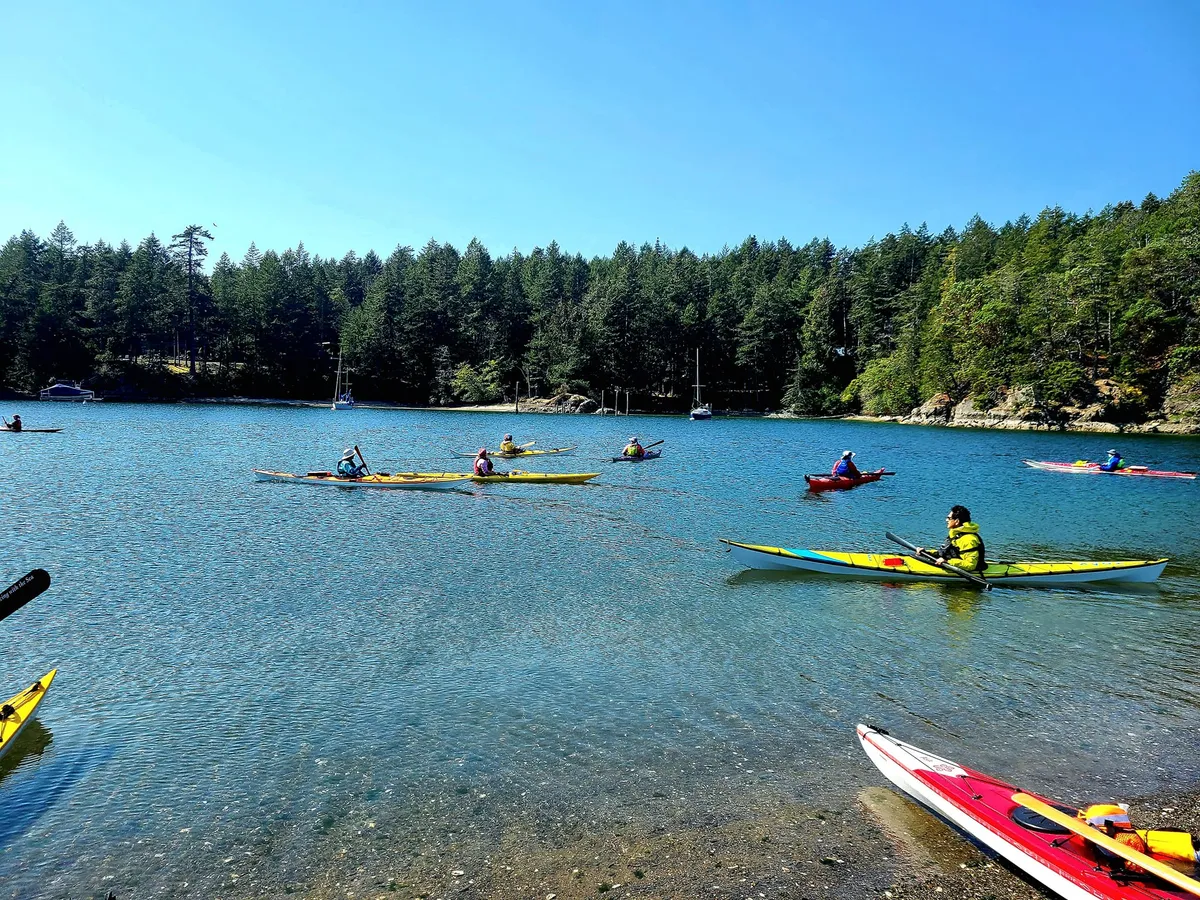
You've paddled for years, and you're good at it.
You've taken the courses. It feels like you're paddling about as well as you can, and the only way forward is more techniques and more years on the water. Maybe your shoulders get tired or sore. Maybe you feel unstable when the water gets rough. But you still tense up when it gets rough. What if that stability was available now, just by changing the approach?
You want to keep paddling into your 70s and 80s.
You want to keep paddling into your 70s and 80s. Not to be the fastest in the group, but to still be out there, enjoying it, years from now, and never feeling like a burden because you're slow.
You want to feel part of the water.
You want to feel more like you belong on the water. Not just a tourist passing through, feeling out of place.
New to kayaking? You're welcome here too. In my experience, beginners often get it quicker, because there's less to unlearn.
How can I learn with Paulo?
Free Lesson
Start here. Enter your first name and email, and I'll send you a free video lesson on the relational model.
The Club
Learn online, all year, with courses and video feedback from me.
Kayak Alchemy Retreat
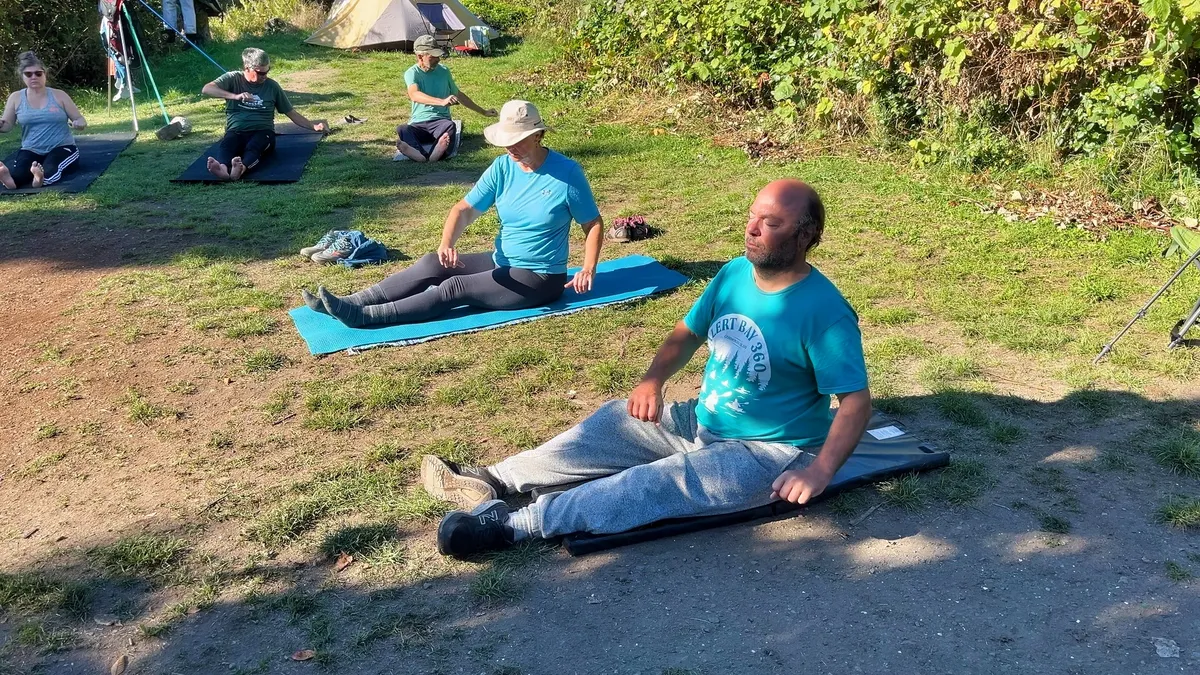
Five days on the water, plus an intro and kayak fitting the day before. It's a small group of up to 9 paddlers on Pender Island, BC
Private Lessons
One-on-one lessons built around you and your paddling, live with me in Victoria, BC. If you don't want to bring your own kayak, I have kayaks you can rent and Greenland paddles you can borrow.
FREE VIDEO
Sign up to watch the video to learn the relational model
You practiced. You took lessons. You're still bracing when the waves come.
It's not your technique. It's the model underneath your technique.
What paddlers notice
"I absolutely have way more confidence for big waves, winds, currents... conditions that would have terrified me before."
Sarah Hood
"This idea of not muscling through keeping up with the group, but letting the water firm up and then just tapping a little off of that and flying forward. Working smarter not harder."
Kim Costin
"What a difference! This time I'm always at the front of the pack. And for the first time, my arms don't feel tired and overworked afterwards."
Sabine
"I was pretty tippy and felt unstable a lot. Now after the retreat I can find stability throughout my stroke... everybody had a major breakthrough and had a blast. I would recommend it to anybody at any level."
David Loeffler
"The biggest change was the idea of 'firming the paddle' in the water. I'd never heard it explained that way, and I quickly felt a big difference in efficiency and speed."
Jennifer Stanton
"I'm now able to combine different parts of my body. Before I would wear out one part, then change to another. Now it's way more integrated and relaxed... no more shoulder pain."
Mary
Questions paddlers ask
Do I need a Greenland paddle?
The Greenland paddle is what makes the relational model work. If you don't have one, I have paddles you can borrow for private lessons and for the retreat.
I've paddled for years. Will I have to start over?
No. Your experience comes with you. What changes is the approach: developing flow before there is any resistance, so stability is there as you paddle.
I'm new to kayaking. Is this for me?
Yes. Beginners often get it quicker, because there's less to unlearn.
Can I learn online?
Yes. The Club is online and runs all year, with courses and video feedback from me.
Where are the Kayak Alchemy Retreats?
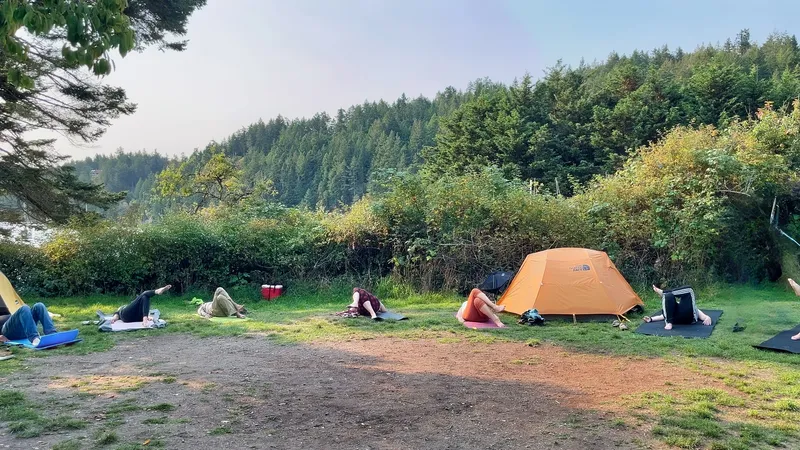
The Kayak Alchemy Retreat is on Pender Island, BC, in a protected area. It's a small group of up to 9 paddlers
I'm in my 60s or 70s. Is it too late?
No. This way of paddling runs on timing and whole-body movement, not strength. Better paddling is not only for the young and strong. One of my students is still paddling at 84, with others 15 to 20 years younger.
About Paulo
I'm Paulo Ouellet
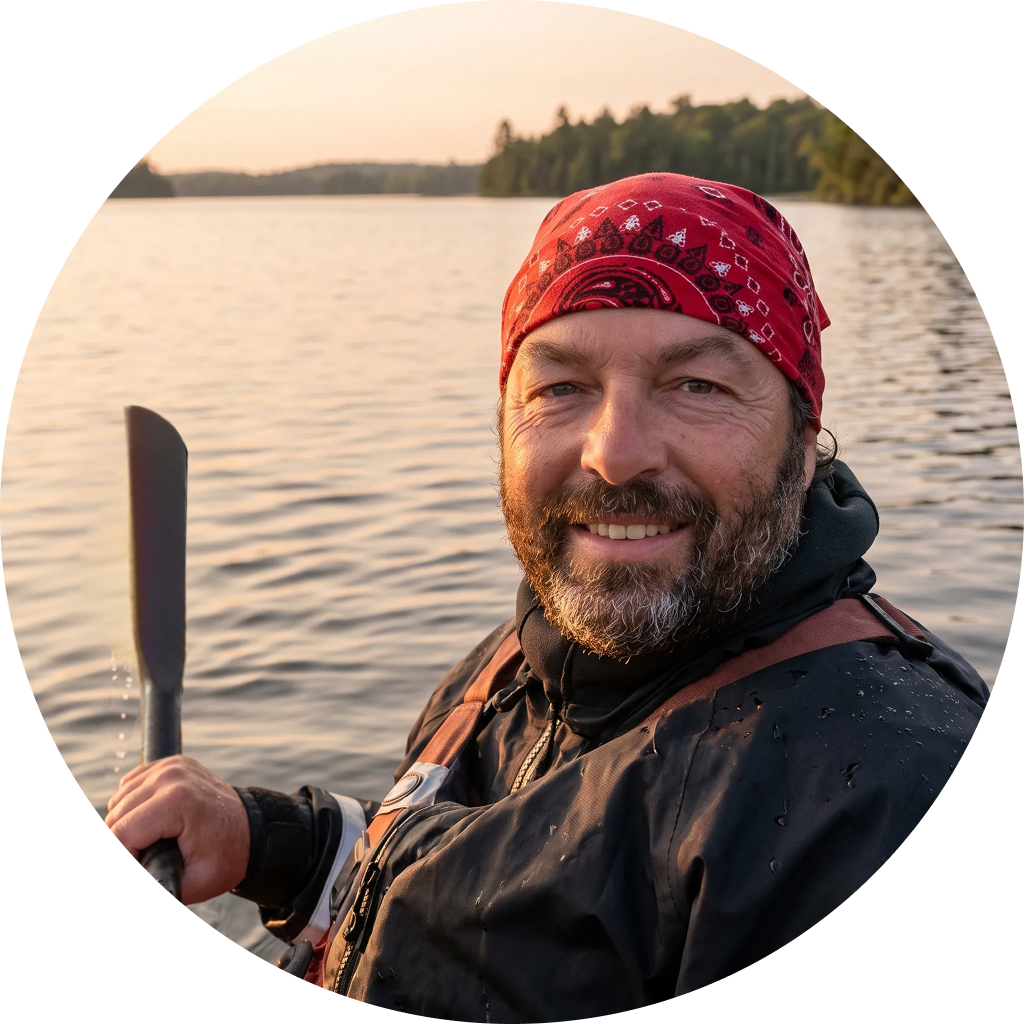
When I started with the Greenland paddle in 2000, I couldn't find any instructions. I watched the Inuit paddle and move their kayaks, and I soon realized the modern approach was missing much of what they had figured out.
Today the Greenland paddle is much more popular, but I see people use and teach it the same way as the euro paddle.
It pains me to see that. They may get some benefits, like it being easier on the shoulders, but they completely miss most of what is possible.
That's why I created the relational model and why I teach it.
For me, it took all the strain off my shoulders, and made me completely stable in waves, in conditions where even experienced kayakers sometimes capsized.
Other paddlers noticed and wanted to learn. I showed them, and in 2006 I started teaching.
I'm a coach, not an instructor. I never set out to be one, and I don't follow any organization's agenda. I teach what I see working best, not what a curriculum says I'm supposed to teach.
What I share is what made a big difference for me and what I see helping others, and I love sharing it.
Dancing With the Sea · Sea kayaking with the Greenland paddle · BC coast and online
© 2026 Dancing With the Sea. All rights reserved.