About Paulo Ouellet and Dancing With the Sea
Paulo Ouellet is the founder of Dancing With the Sea, a sea kayaking school on the BC coast and online. He has paddled with a Greenland paddle since 2000 and taught it since 2006. He teaches a whole-body approach: moving with the kayak and the water instead of forcing the paddle.
Paulo's story
How did Paulo start with the Greenland paddle?
In 2000 I saw a couple glide past me... smooth and quiet, with Greenland paddles.
I had to try one.
I was the newest paddler in the group I paddled with, and the only one paddling with a Greenland paddle. Almost nobody used one back then.
People didn't think much of it. A few were a bit annoyed by it. They wondered why I would choose such an obviously less capable paddle.
One day I was behind the group, paddling in a following sea with waves bigger than I was used to. I wanted to look cool and ride a wave to catch up.
I got on top of the wave and almost instantly lost my balance and capsized.
I was so embarrassed that I tried to get back in my kayak before anyone noticed. Someone did notice and paddled toward me to help, but I was already back in my kayak by the time they arrived.
Then the group leader said, "It's the paddle, you can't brace with this thing."
I was embarrassed, and part of me wondered if the leader was right.
But I didn't want to give up the Greenland paddle. I decided to learn everything I could about using it.
I also had a nagging feeling that the Inuit had figured out something we had missed in modern kayaking. I didn't know yet what it was.
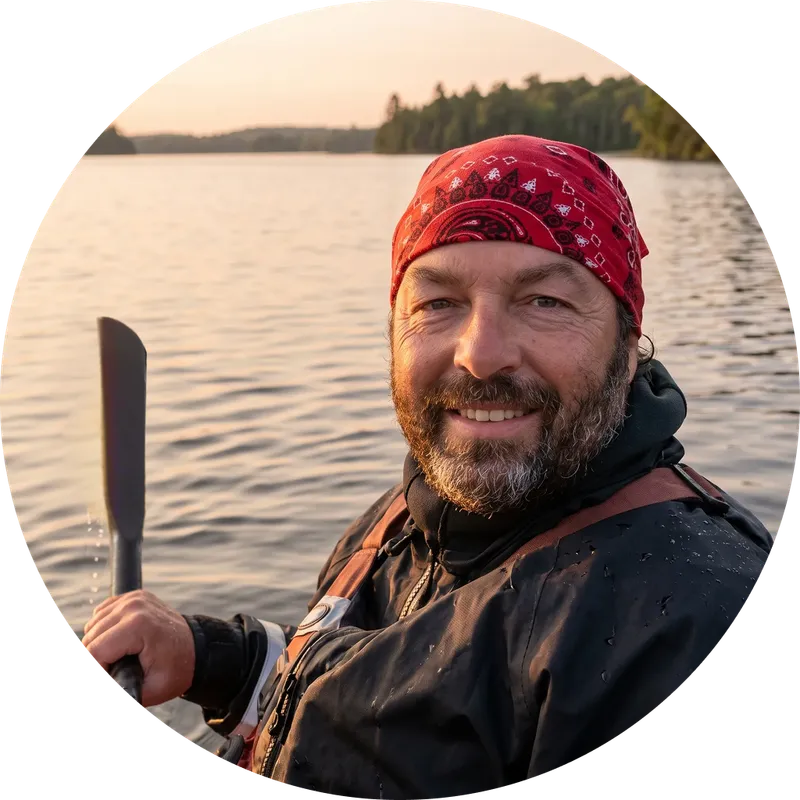
I was paddling with my foot pegs tight and my pelvis locked in, because that's how I was taught.
When I tried the balance brace, the way I saw it done in videos, it felt like the kayak was pushing my head underwater.
The videos of Inuit paddlers showed me something different: a loose pelvis, rolling and bracing, and flow that starts in the body before it reaches the paddle.
So I loosened the foot pegs and created a better fit for my thighs.
The difference was instant. I could float in the balance brace, effortlessly. The kayak no longer pushed my head under.
Two weeks later, I was doing the layback roll and the forward roll, effortless and consistent.
It didn't take years of practice or special talent. It took moving my body naturally. That's all that was missing.
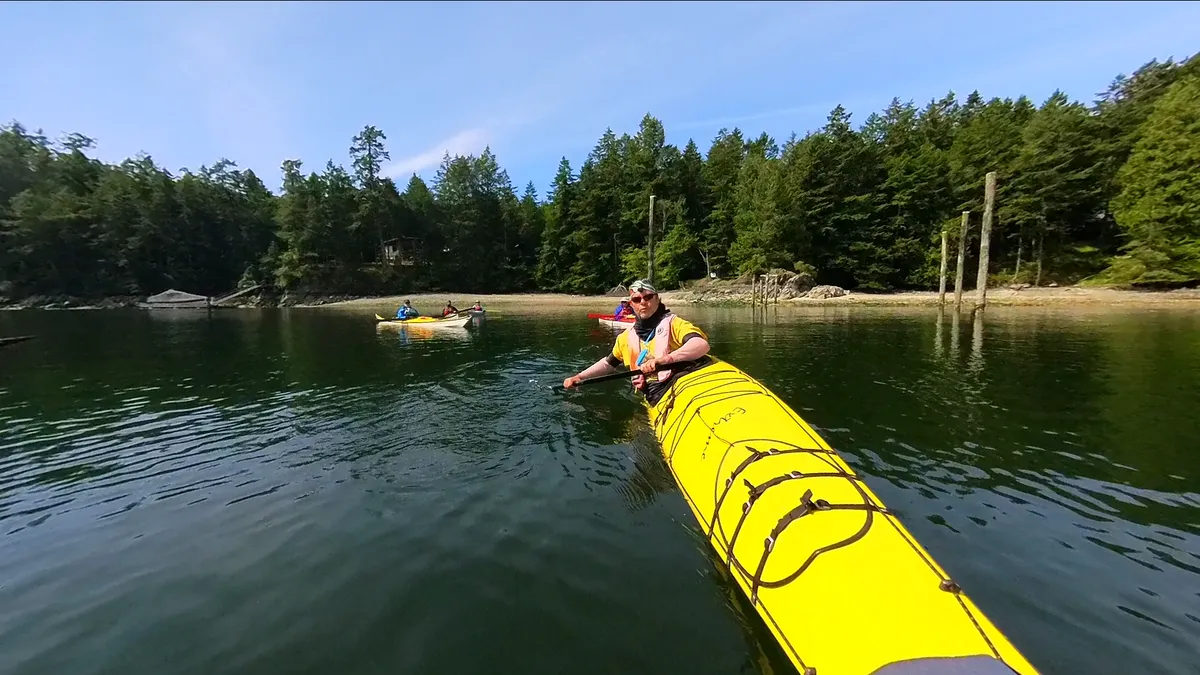
What I see with clients
Many people practice for years with their pelvis jammed in, thinking more practice will eventually fix it.
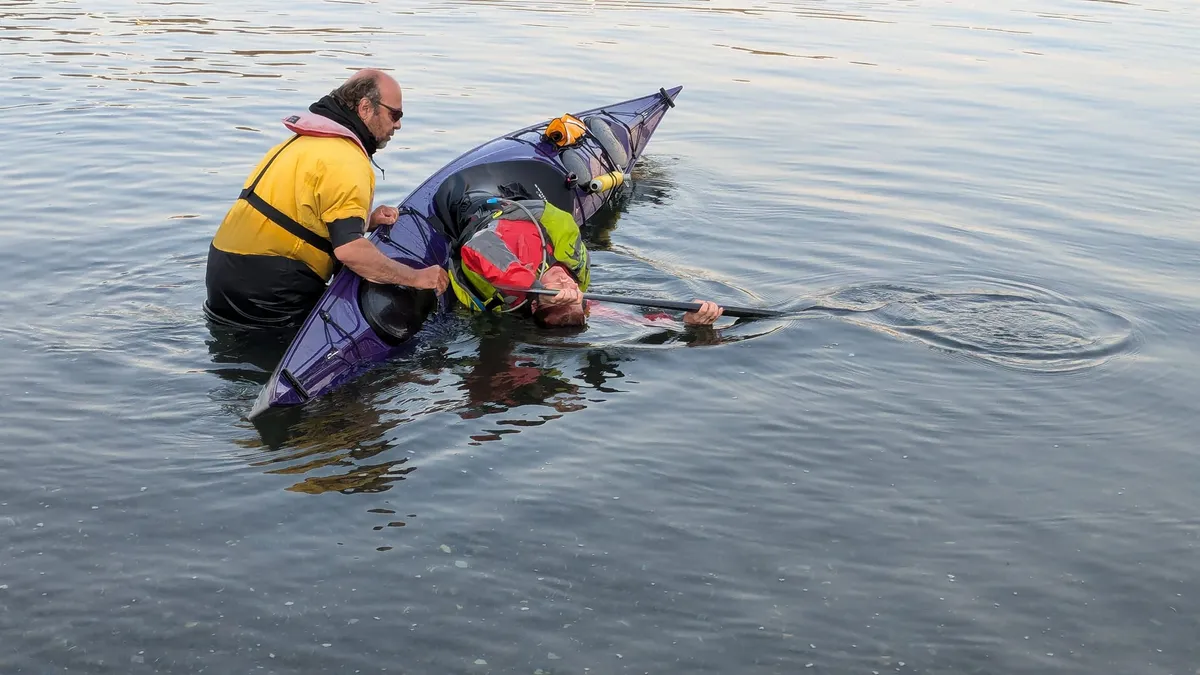
When I show someone how to use their full range of motion by moving their whole body the way it already wants to move, they often float in the balance brace right away.
Not everyone gets that result, but it's a lot more likely when your pelvis is free to move.
That nagging feeling was right. We lost something the Inuit knew.
And ever since that first balance brace, I've been living inside one question: "What else have we missed?"
Want to feel it for yourself? Start with the free lessons.
Greenland Paddle Since 2000 • Teaching Since 2006 • BC Coast & Online
Where did these ideas come from?
Watching Inuit paddlers
I didn't sit down and invent a system. It came from years of paddling, teaching and watching students... and one question: had we taken the paddle, but kept the old model?
Studying how bodies move
That question took me outside kayak instruction. Martial arts. A Tai Chi teacher. A Feldenkrais practitioner. Physiotherapists. How movement begins in the body. How timing works. How relaxation creates sensitivity.
Testing it on the water
Then I tested everything on the water. With my own paddling, and with real students.
I'm not asking you to believe this because I say it. I'm asking you to test it. The paddle will tell you. The kayak will tell you. The water will tell you. Your body will tell you.
Where does Paulo teach?
Free Lessons
Short videos you can watch today. Each one shows one shift to try on your next paddle.
The Club
Learn online, all year, with courses and video feedback.
Kayak Alchemy Retreat
Four full days of lessons on the water, in a small group of up to 9 paddlers, on Pender Island, BC.
Private Lessons
One-on-one, built around you and your paddling.
FREE 3-PART VIDEO SERIES
Sign up to watch the 3 video series
You practiced. You took lessons. You're still bracing when the waves come.
It's not your technique. It's the model underneath your technique.
What paddlers notice
"I was muscling through keeping up with the group... now I feel like I can look and the kayak will go where I look. And I can do it gently and it does start to feel like dancing... I can now go out by myself."
Barbara Perkins
"Following your advice has kept me paddling at 84 with others 15-20 years younger."
Dave Fairbrook
Questions about Paulo
Who created the relational model of sea kayaking?
Paulo Ouellet. He created the term and the approach from years of teaching, studying Inuit paddlers and testing on the water.
Is Dancing With the Sea a certification program?
No. It's a way of paddling: the relational model, learned through the Greenland paddle.
How long has Paulo been teaching?
Paulo has paddled with the Greenland paddle since 2000 and taught it since 2006.
Dancing With the Sea · Sea kayaking with the Greenland paddle · BC coast and online
© 2026 Dancing With the Sea. All rights reserved.